Materials
What your deck or dock is made of
A side-by-side look at decking boards, then the framing, fasteners, railings and marine lumber that decide how long the whole thing lasts near salt water.
Decking boards
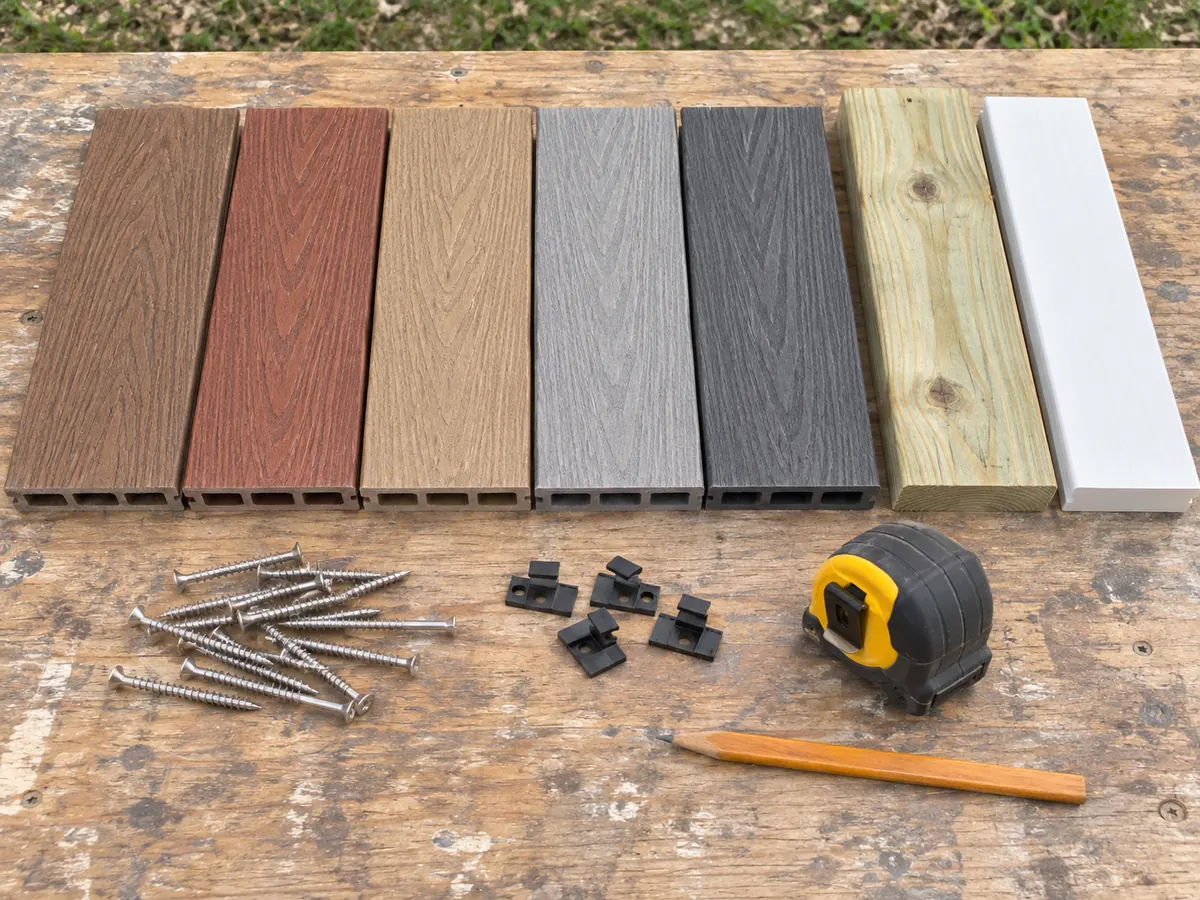
Three families of deck board
Nearly every deck and dock surface we install falls into one of these groups. None is right for everyone; the table shows where each one fits.
| Capped composite | PVC | Pressure-treated pine | |
|---|---|---|---|
| What it is | Wood fiber and plastic core with a protective shell. Trex says its boards are made from 95% recycled materials. | Solid cellular plastic with no wood content. | Southern yellow pine treated with preservative. |
| Upkeep | Wash with soap and water. No sanding, staining or sealing. | Wash with soap and water. No staining or sealing. | Needs regular cleaning and a water-repellent finish to slow checking and graying. |
| In full sun | Gets hot, and darker colors get hotter. Lighter colors are the better choice around pools. | Also warms in sun; lighter colors help. | Warms in sun; can splinter as it weathers. |
| Near water | Suited to pool surrounds and docks when installed with stainless fasteners. | Unaffected by moisture; a common choice at the waterline. | The traditional dock decking. Lowest cost up front, most upkeep. |
| Structural? | No. Boards sit on a wood or steel frame. | No. Boards sit on a frame. | Yes. The same species frames most decks and docks. |
| Up-front cost | Higher than wood. | Usually the highest. | Lowest. |
Composite details are from Trex's own FAQ and product pages, which list 25-, 35- and 50-year limited residential warranties depending on the product line. Other brands publish their own terms. Warranties come from the manufacturer, and the details vary, so read the document for the exact board you choose.
Color and comfort
Yes, deck boards get hot
Any surface in direct summer sun heats up, and decking is no exception. Trex states plainly that its boards "will get hot in direct sun on hot days" and that "the darker the color, the hotter the deck will feel," and suggests lighter colors or its heat-mitigating lines for hot climates (Trex FAQ).
In practice that means three things on a sunny deck:
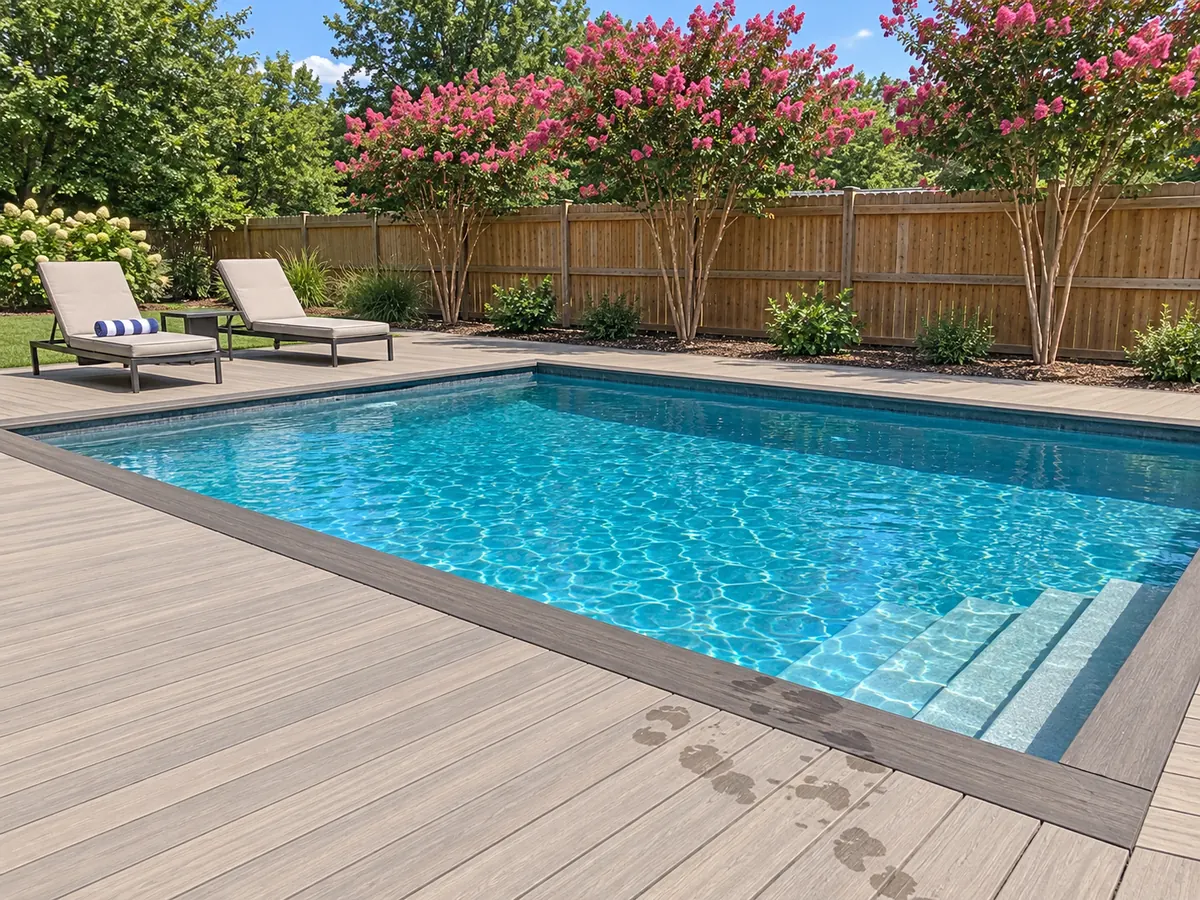
- Choose a lighter board for south- and west-facing decks and for pool surrounds
- Plan shade where people sit and where children play
- Look at full-size samples outdoors at midday before choosing a color
Framing
The frame does the real work
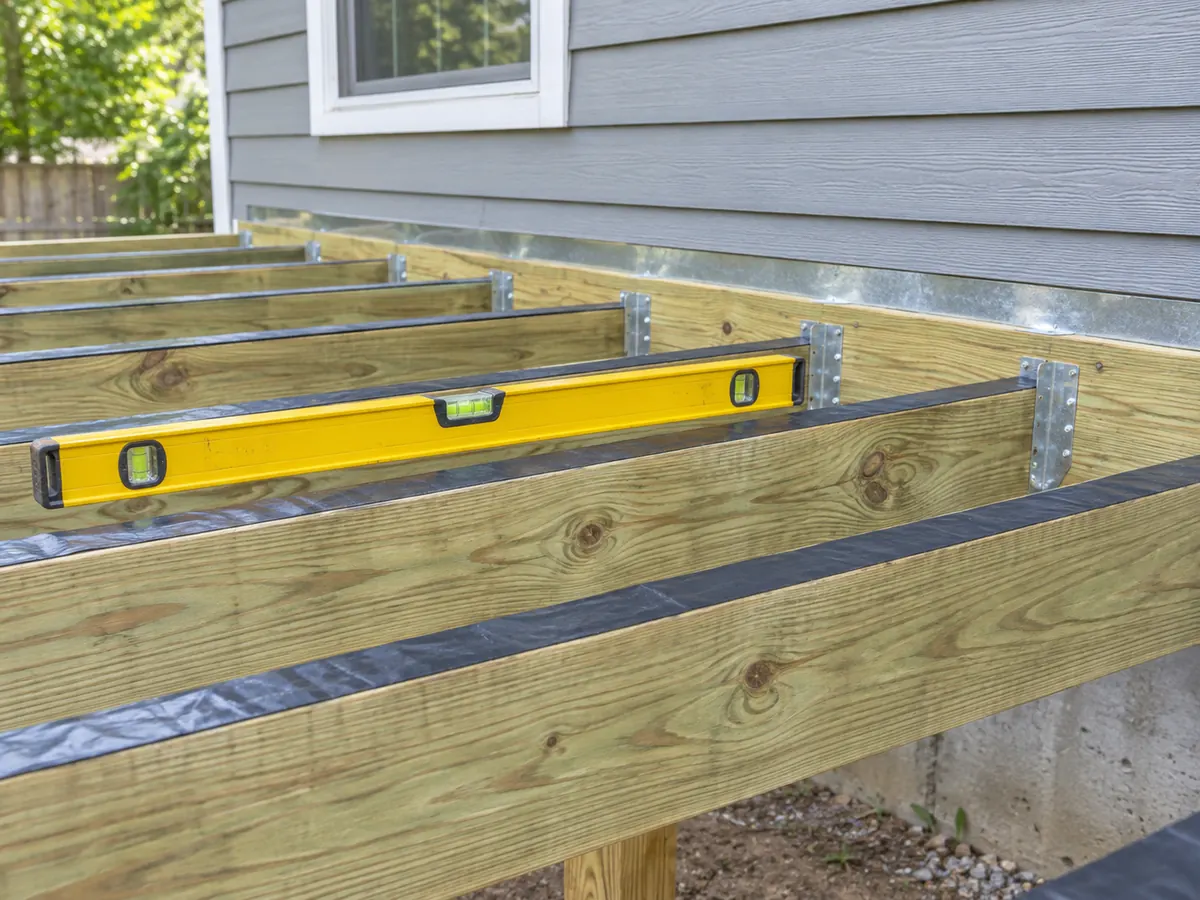
Decking boards are a finish surface. Posts, beams, joists and the ledger carry the load, and they are almost always pressure-treated lumber.
- Joist spacing. Trex calls for joists no more than 16 inches on center for standard composite layouts and 12 inches for diagonal ones. Where an older deck is framed at 24 inches, its guide suggests adding a joist between each existing pair (Trex Academy).
- The ledger. The American Wood Council's DCA 6 guide calls for siding to come off before the ledger goes on, corrosion-resistant flashing at the connection, and half-inch lag screws or bolts with washers (DCA 6).
- Not on veneer. The same guide prohibits hanging a deck from brick or stone veneer or from a cantilevered floor overhang. Those houses get a free-standing deck on its own posts.
- Joist tape. Butyl tape on joist tops seals around fasteners and helps keep water out of the framing.
Fasteners and hardware
Small parts, big consequences
Salt air attacks metal long before it troubles a deck board. Getting the screws, bolts and hangers right is the cheapest insurance on the job.
Stainless near salt water
DCA 6 says fasteners and connectors within 300 feet of a salt water shoreline "shall be stainless steel grade 304 or 316" (AWC DCA 6). FEMA adds that Type 316 is the more corrosion-resistant of the two (FEMA TB 8).
Heavier galvanizing inland
FEMA notes that connectors with G185 galvanizing carry zinc coatings two to three times thicker than standard G60 or G90 hardware, and that corrosion rates stay elevated as far as 5 to 10 miles inland.
Never mix metals
Stainless connectors need stainless nails and screws. FEMA warns that mixing metals speeds up corrosion of the weaker one and "can dramatically reduce its lifespan."
Dock lumber
Marine lumber is its own category
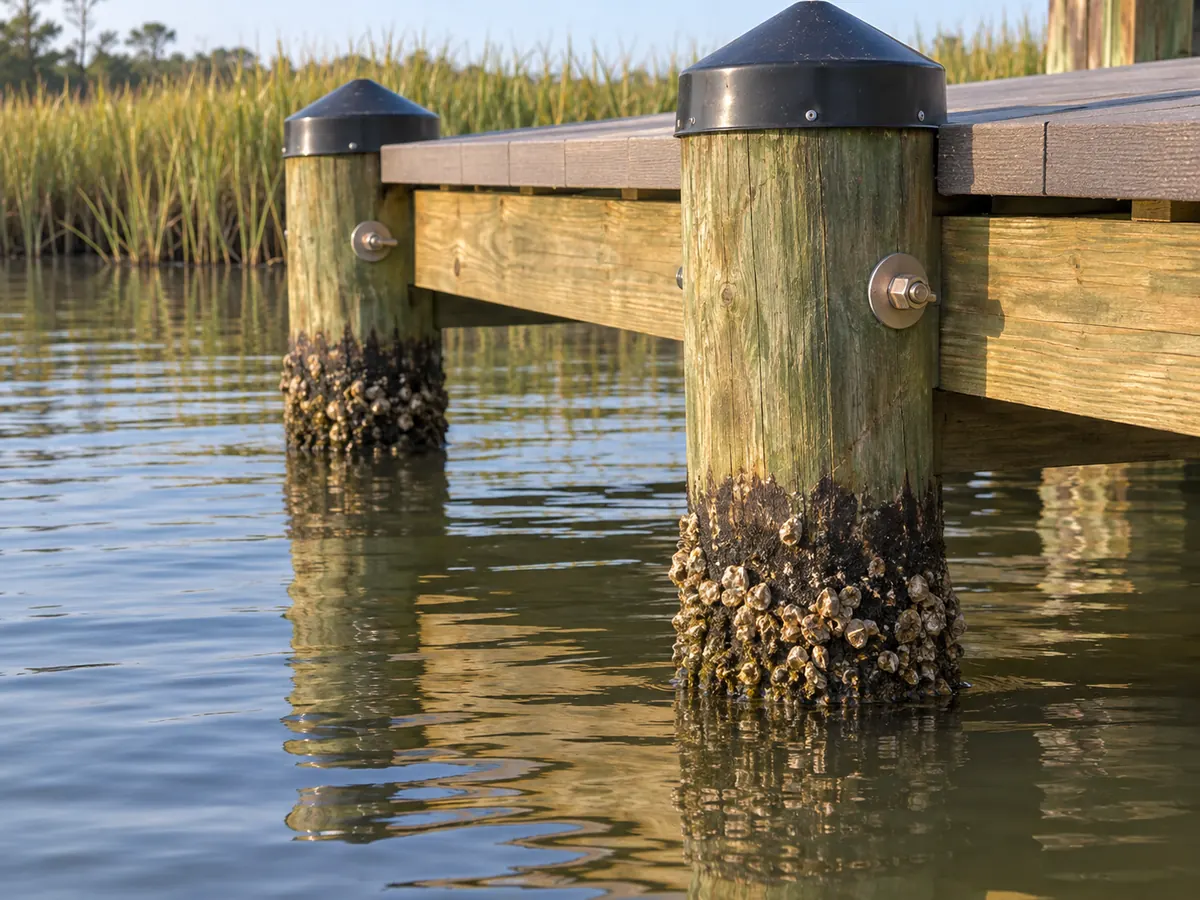
Treated lumber is graded by where it will be used. The American Wood Protection Association's use categories run from above-ground decking up to marine piling, and the label on the end of each piece tells you which one it was treated for (AWPA Standard U1).
- UC3B Above ground, exposed: deck boards, railings, pickets.
- UC4A to UC4C Ground and fresh water contact, with UC4B covering salt water splash zones.
- UC5A to UC5C Marine use: piling, bracing and bulkheads exposed to salt or brackish water. The letter depends on the stretch of coast, because different marine borers live in northern, central and southern waters.
Railings
Railing options
Composite
Chunkier posts and rails that match or contrast with the deck boards. Washes clean like the decking.
Aluminum
Slim powder-coated balusters that keep the view open. Popular on waterfront decks.
Cable and glass
The most open sightlines. Hardware needs to be marine-grade stainless this close to salt water.

Not sure which board is right?
Tell us where the deck sits and how you use it. We will bring samples to the site visit.