
Deck resurfacing
Keep the frame. Lose the splinters.
When the structure is sound and the boards are not, resurfacing swaps what you see and touch for new decking and railings, and keeps what still works.
What it is
New surface, same skeleton
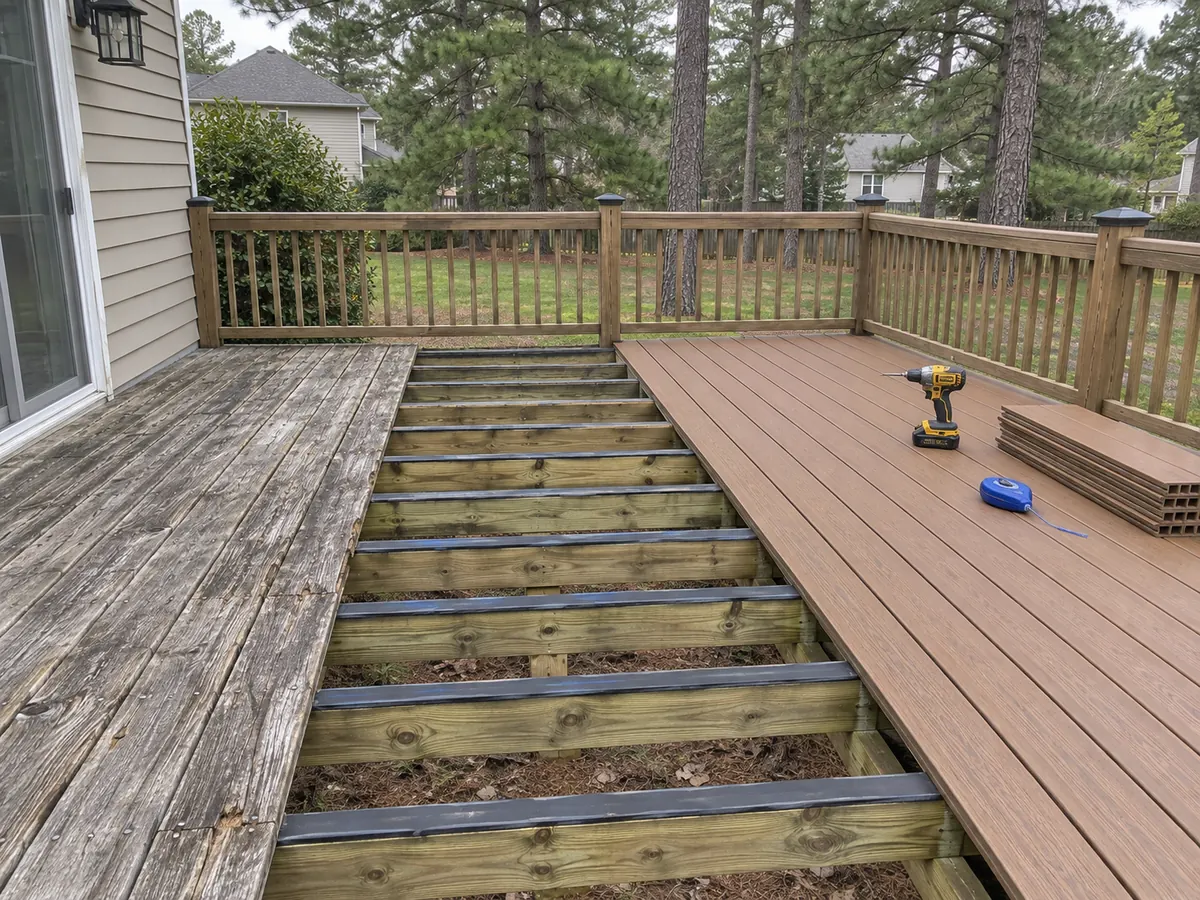
Deck boards and railings take the sun, rain and foot traffic. The frame underneath is sheltered by them, so it often outlasts the surface by many years. Resurfacing takes advantage of that: the old boards and rails come off, the frame is inspected and corrected, and new decking goes down.
You get a deck that looks and feels new without paying to rebuild what still works.
- Old decking, fascia and railings removed and hauled away
- Posts, beams, joists, ledger and hardware inspected
- Damaged framing and rusted hardware replaced
- Joists added or leveled so the new boards sit flat
- Joist tape on framing tops
- New decking, fascia, railings and stair treads
When resurfacing is the wrong answer
New boards on a failing frame only hide the problem. Trex's own resurfacing guidance is blunt about it: "All decayed and/or rotting framing will need to be replaced before you build your deck," and so will cracked framing (Trex Academy).
If the posts are soft at the ground, the ledger is pulling away, or the deck moves when you walk on it, plan for a rebuild. We will tell you which side of the line your deck is on before you spend anything.
Use the 5-question checkerThe inspection
What we check before ordering a single board
These checks follow the manufacturer's resurfacing guidance and the deck industry's safety checklist.
Soft spots
We probe posts, beams and joists with a screwdriver. Trex's test is simple: if the screwdriver digs into the wood, you have found a soft spot (Trex Academy).
Hardware rust
Trex treats even a small amount of orange, brown or red rust on framing hardware as a reason to replace it. Near salt water, replacements should be stainless.
Joist spacing
Composite boards need joists no more than 16 inches on center. Where an old deck was framed at 24 inches, a joist is added between each pair (Trex).
The ledger
We look for flashing above the ledger and bolts or lags through it. A ledger held by nails alone, or with no flashing, is corrected before anything else.
Posts and footings
Posts should be plumb, solid at the base and sitting on proper footings, not buried in soil that holds water against them.
Level and crown
Old joists are rarely flat. High spots are planed and low spots shimmed so the new surface does not telegraph every wave.
How it goes
A typical resurfacing job
- Inspect. The frame is checked from below and, where needed, with a few boards lifted.
- Quote. You get a written price for the surface, plus how any hidden damage will be priced if we find it.
- Strip. Boards, rails and fascia come off and leave the site.
- Correct. Repairs, added joists, new hardware, leveling and joist tape.
- Deck and rail. New boards, border, fascia, railings and treads.
- Walk it. We go over the finished deck together.
For scale, Trex estimates three to five days for two people with intermediate carpentry skills on its example deck (Trex Academy). Size, repairs and railing choice move that number.
Is resurfacing cheaper than a new deck?
It usually is, because footings, posts, beams and most joists are reused and there is less demolition. How much less depends on how many repairs the frame needs. The quote shows both the surface work and any framing repairs.
Can I switch from wood boards to composite?
Yes, and it is the most common reason people resurface. The frame may need extra joists first, since composite boards call for spacing of no more than 16 inches on center (Trex Academy).
Will you replace the railing too?
Normally, yes. Old wood railings rarely suit a new surface, and loose railings are one of the most common safety problems on older decks. If your railing is sound and you want to keep it, tell us.
What if you find rot once the boards are off?
We stop, show you, and price the repair before going further. The written quote explains in advance how hidden damage is handled so it is never a surprise on the final bill.
Common questions
Deck resurfacing: quick answers
More on quotes, permits and materials in the full FAQ.
Read the full FAQFrom the Field Guide
Worth reading before you decide
Resurface or replace? How to tell what your deck needs
A five-question checker and the inspection points that decide whether new boards on the old frame make sense.
DecksComposite vs. pressure-treated wood decking
Upkeep, heat, feel underfoot and where each material earns its place.
DecksHow to clean and care for composite decking
A simple spring and fall routine, pressure-washer limits and what not to use.

Think your deck is a candidate?
Send a few details. We will inspect the frame and tell you honestly whether resurfacing makes sense.