
Decks · Docks · Pool decks
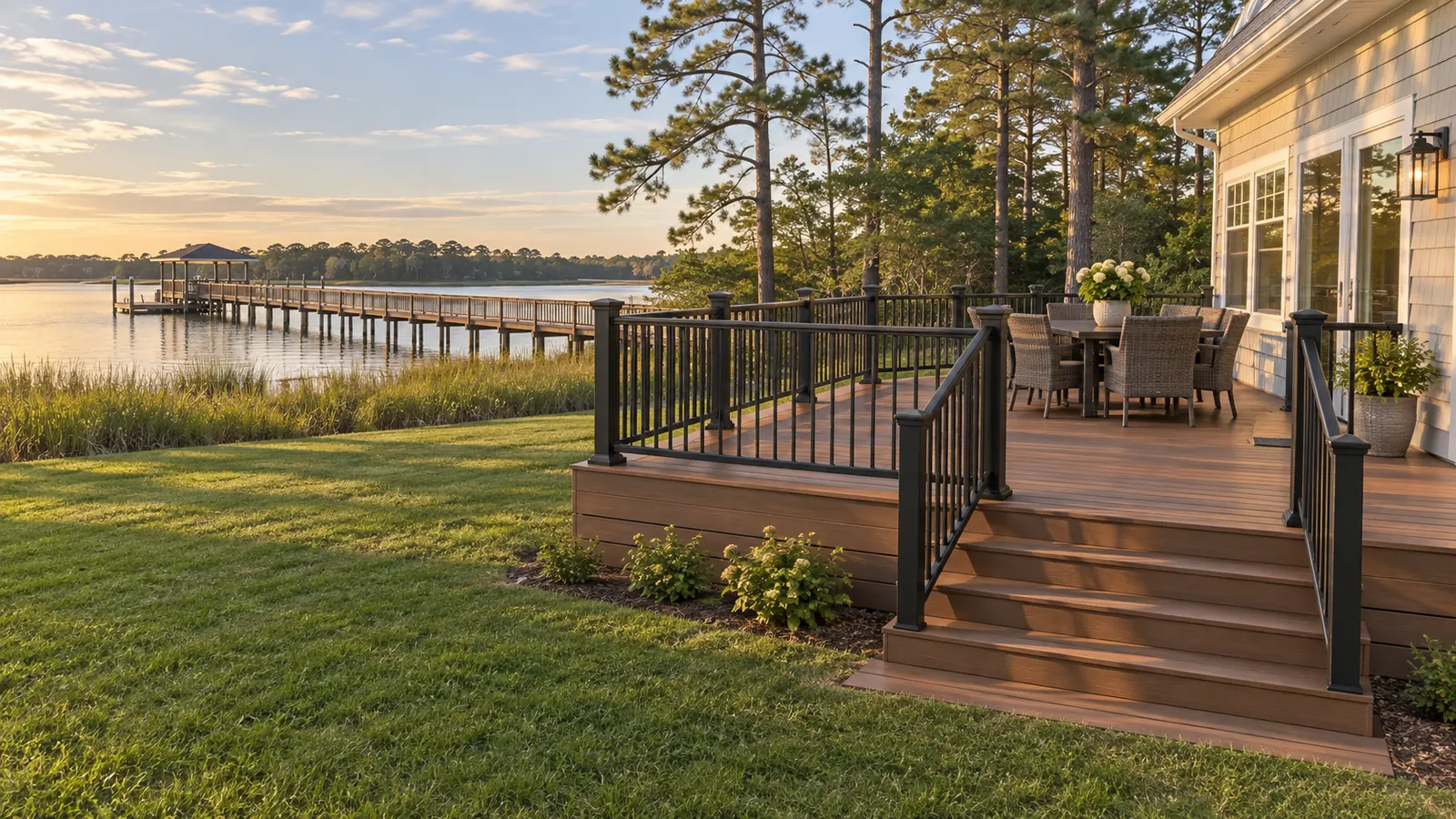
Decks and docks, built T-Rex tough.
Trex-Decks builds new decks, resurfaces tired ones, wraps pools in barefoot-friendly boards, and builds and repairs private docks. Low-maintenance materials, corrosion-resistant hardware, and a written quote before any work starts.
- Deck resurfacing
- Pool decking
- Dock repairs
- New decks and piers

What we build
Five ways we put boards under your feet
From a first deck on a new house to a pier that has seen one storm too many, these are the jobs we take on.
Deck building
New composite and wood decks, framed for the coast and finished with railings, stairs and lighting.
Learn more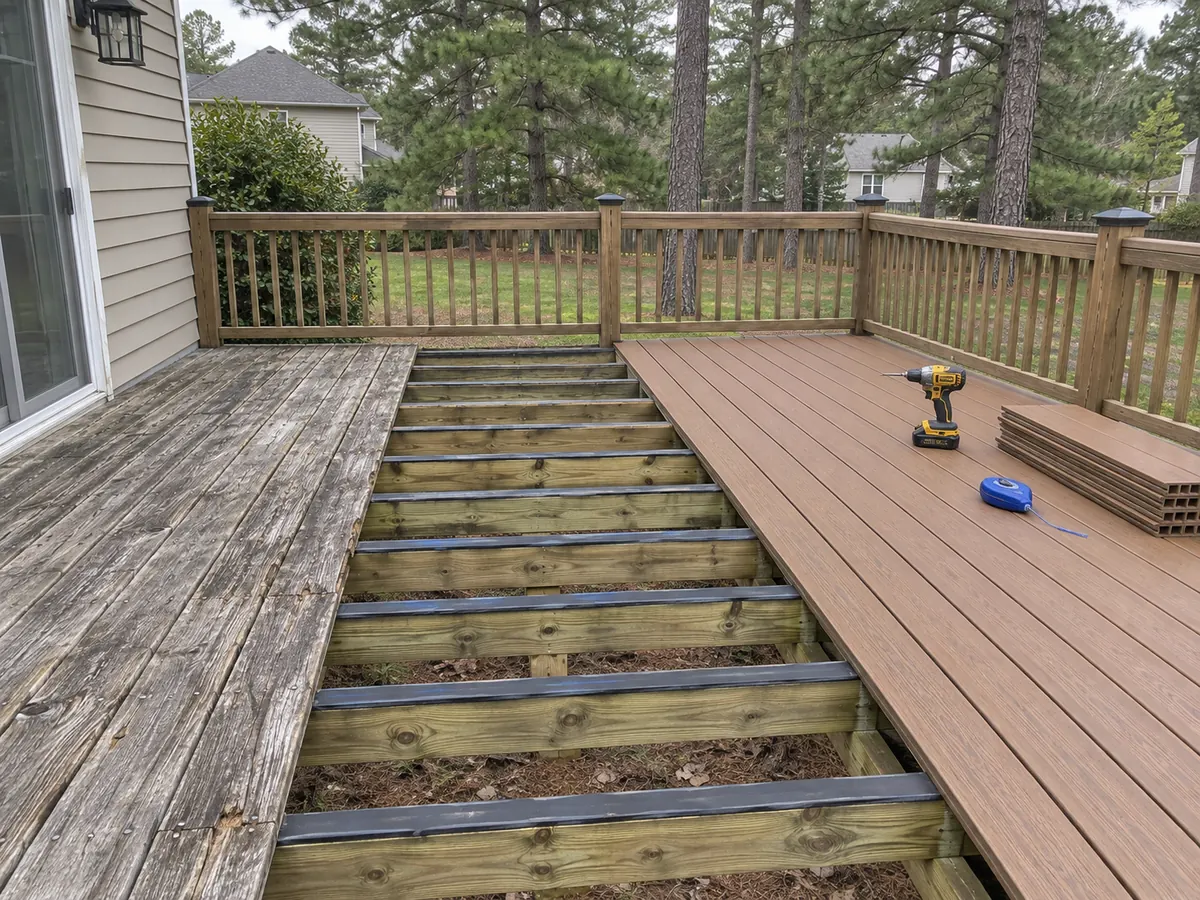
Deck resurfacing
Keep the sound frame, lose the splinters. New boards and rails on the structure you already have.
Learn more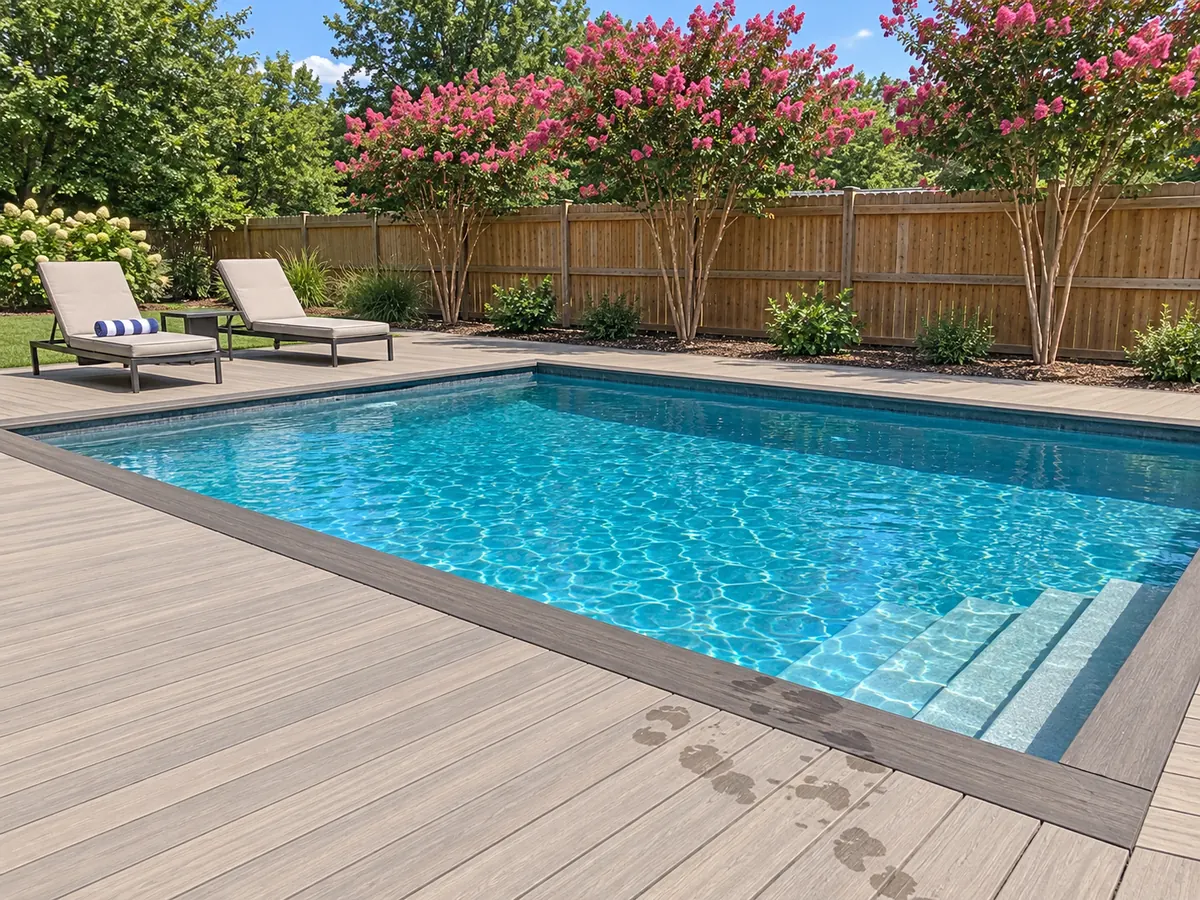
Pool decking
Lighter-colored, barefoot-friendly boards around in-ground and above-ground pools.
Learn more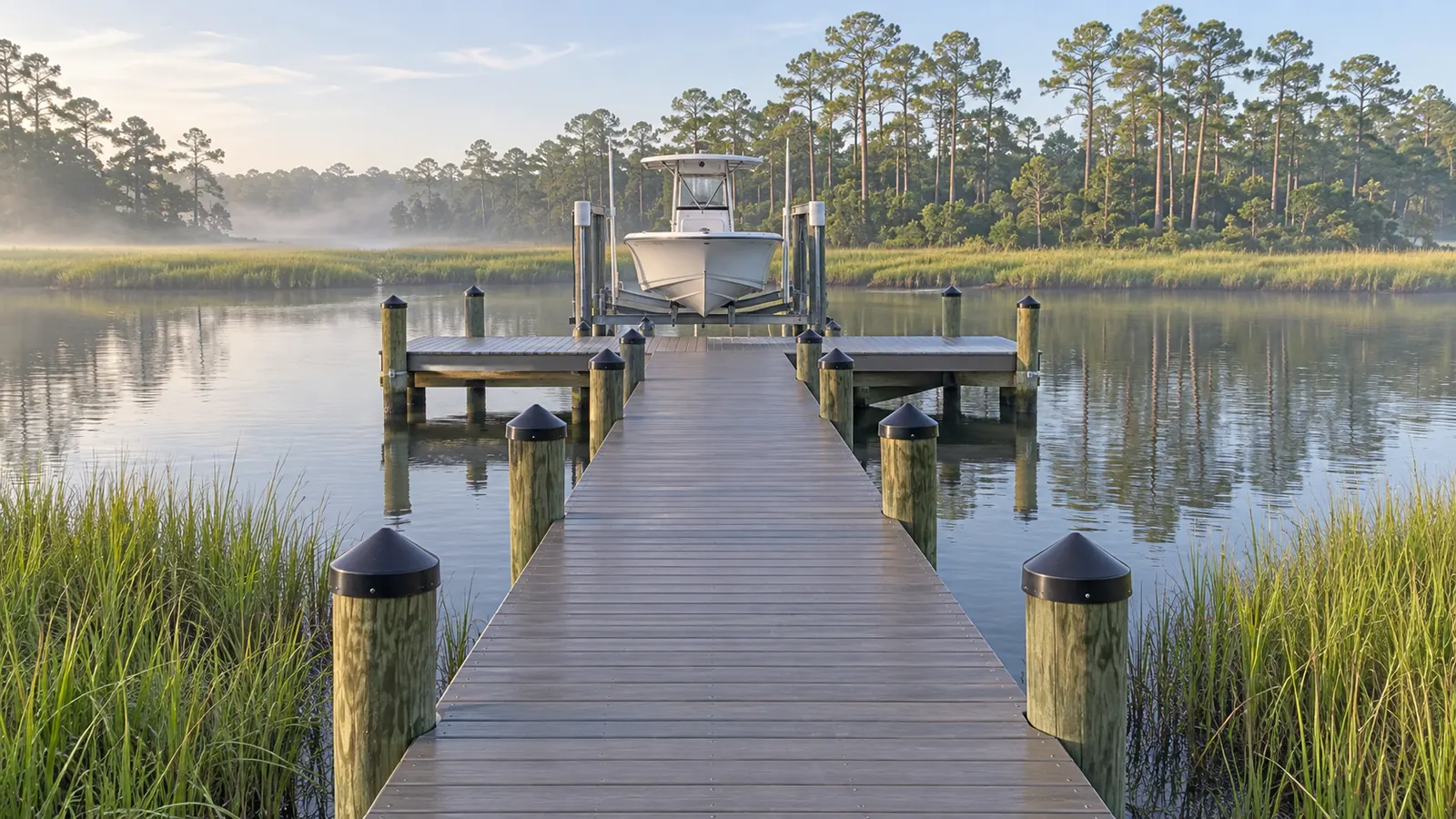
Docks and piers
Private piers, platforms and boat lifts designed around your water, depth and boat.
Learn more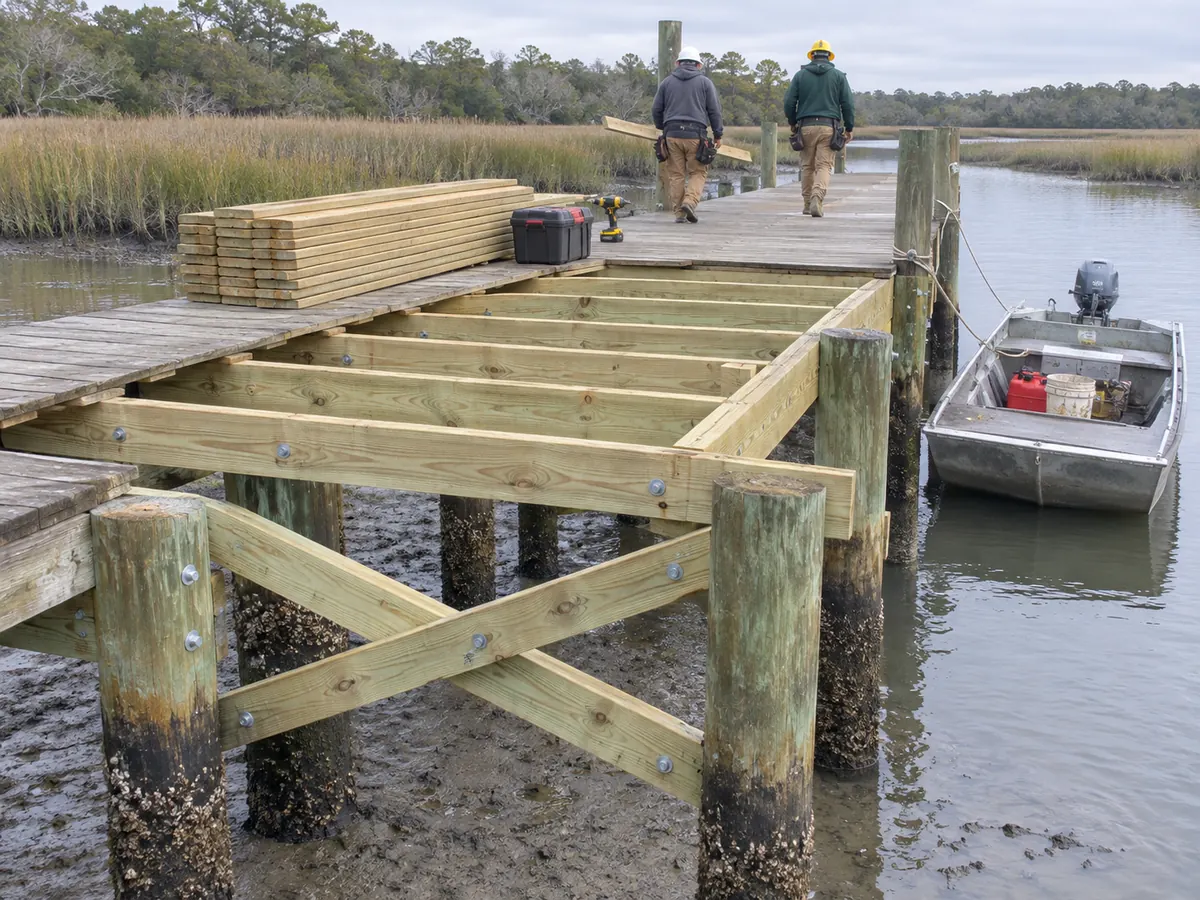
Dock repairs
Pilings, stringers, bracing, decking and hardware put right before a small problem grows.
Learn moreWhy the details matter
Built for sun, water and hard weather
Outdoor structures live a hard life, and harder still near salt water. These four numbers shape almost every decision we make on a job.
Where stainless takes over
Within 300 feet of a salt water shoreline, the American Wood Council's deck guide calls for stainless steel fasteners and connectors (DCA 6).
Joist spacing for composite boards
Trex says joists should generally be no more than 16 inches on center for composite decking, and 12 inches for diagonal layouts (Trex Academy).
The stainless grade for salt air
FEMA's coastal guidance says Type 316 stainless is more corrosion resistant than 304, and that fasteners must match their connectors (Technical Bulletin 8).
Height where guards are required
Decks more than 30 inches above grade need a guard under the model residential code, per the American Wood Council's DCA 6 guide.
The most common question
Resurface it, or start over?
Deck boards take the weather so the frame does not have to. That is why plenty of tired-looking decks have years of life left in the structure underneath. Resurfacing only makes sense when that structure passes inspection, so we start there.
- Posts, beams and joists are solid when probed, with no soft spots
- The ledger is flashed and bolted to the house, not just nailed
- Hangers and hardware show no red rust
- Joists are close enough together for the new boards, or can be added to
How a job goes
Four steps, no surprises
Every project is different, but the path from first message to final walkthrough stays the same.
Tell us what you have in mind
Two minutes on the quote form: what it is, roughly how big, and how to reach you.
We visit and measure
We look at the site, check any existing structure, and talk through layout, materials and budget.
You get a written quote
Scope, materials and price on paper. If permits are needed, we map out which ones before work starts.
We build, then walk it with you
The job is not done until you have walked every board, tried the gate and checked the railing with us.
Materials
Pick the board. We will sweat the parts you cannot see.
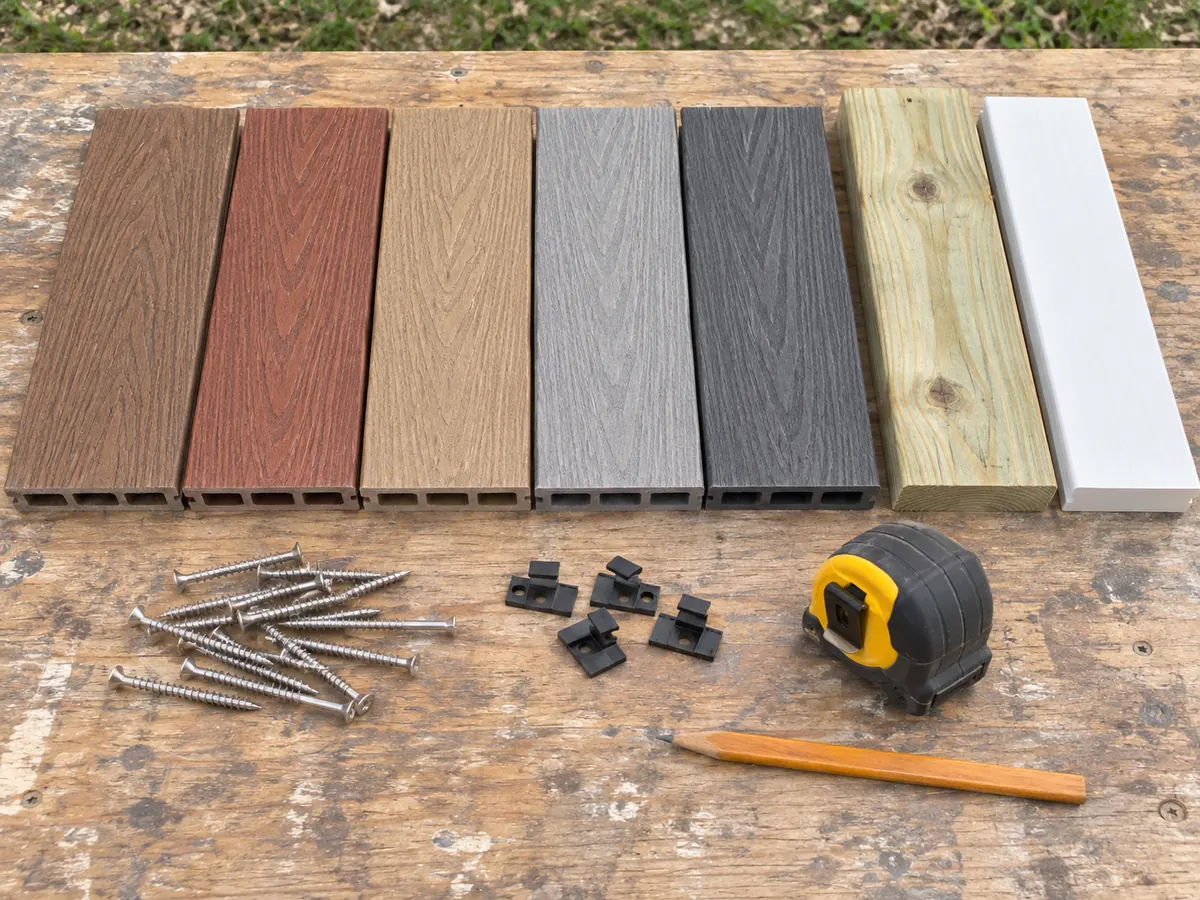
Color and grain are the fun part. The parts that decide how long a deck or dock lasts are mostly hidden: the framing lumber, the flashing behind the ledger, and every screw, bolt and hanger holding it together.
Our materials page compares composite, PVC and pressure-treated decking side by side, then covers framing, fasteners, railings and the marine lumber that docks call for.
The Field Guide
Know your deck before you spend on it
Plain-English guides on permits, materials, safety and upkeep, written for homeowners and linked to the sources behind them.
Dock and pier permits, in plain English
Why a dock answers to federal, state and local offices, and how to line the approvals up.
DecksComposite vs. pressure-treated wood decking
Upkeep, heat, feel underfoot and where each material earns its place.
DecksThe 15-minute deck safety check
Ten things to look at each spring, and the three that mean stop using the deck.
Do you only install Trex-brand decking?
No. The name comes from the dinosaur, not the manufacturer. We install composite decking from the major brands along with PVC and pressure-treated wood, and we will talk through what suits your deck, your budget and how much sun the boards will see. Trex-Decks is an independent contractor and is not affiliated with Trex Company, Inc.
Can you put new boards on my existing deck frame?
Often, yes. If the posts, beams, joists and the connection to the house are sound, resurfacing swaps the worn boards and rails for new ones and keeps the structure. The frame has to be checked first, and joists sometimes need to be added so the spacing suits composite boards. Our resurface-or-replace guide walks through the checks.
Do I need a permit for a deck or a dock?
Usually. The model residential code exempts only small, low, freestanding decks, and a dock in navigable water needs federal authorization on top of any state and local approvals. See the deck permit guide and the dock permit guide. Rules differ from place to place, so we confirm with your local offices before work starts.
How do I get a price?
Fill in the free quote form. It takes about two minutes. We follow up to arrange a visit, measure the site, and send a written quote that spells out materials and scope.
Quick answers
Asked before every job
These four come up on nearly every first call. The FAQ page covers quotes, decks, resurfacing, pool decks, docks and care in more depth.
Read the full FAQ
Got a deck or dock in mind?
Tell the T-Rex what you are planning. We will come out, measure, and send a written quote.