
The short version
- Wood costs less up front; composite costs less effort for as long as you own it.
- Composite is a surface only and needs joists 16 inches apart or closer.
- All decking gets hot in full sun. Lighter colors help.
- Mixing treated framing with composite surfaces is the common answer.
Two good materials, two different deals
Pressure-treated pine is the cheapest way to cover a deck frame and has been the default on decks and docks for decades. Composite costs more on day one and asks far less of you afterwards. Neither choice is wrong. They suit different owners.
| Capped composite | Pressure-treated pine | |
|---|---|---|
| Up-front cost | Higher | Lowest |
| Routine care | Soap, water and a soft brush | Cleaning plus a water-repellent finish on a regular cycle |
| Splinters | None | Likely as boards weather and check |
| Heat in sun | Gets hot; darker colors hotter | Gets hot; lighter when weathered |
| Color | Chosen once, built into the board | Can be stained and re-stained in any color |
| Framing needs | Joists at 16 inches or closer | More tolerant of wider spacing |
| Warranty | Manufacturer's limited warranty, often decades | Varies by treater; covers decay, not appearance |
What composite actually is
Composite boards combine wood fiber and plastic, and current boards wrap that core in a protective shell. Trex describes its decking as made from 95% recycled materials, including reclaimed wood and recycled plastic film, and says it does not splinter, rot or decay like pressure-treated lumber and never needs sanding, staining or painting (Trex).
Two limits are worth knowing. Composite is a surface, not structure: Trex states that its decking "is not a structural product" (Trex FAQ), so it always sits on a framed deck. And it needs closer joist spacing than wood, generally 16 inches on center or less (Trex Academy).
The heat question
People ask this more than anything else. Trex's answer is direct: its decking, like other outdoor surfaces, "will get hot in direct sun on hot days," darker colors feel hotter, and in hotter climates buyers should consider lighter colors or boards with heat-mitigating technology (Trex FAQ). Pick color with your sun exposure in mind and look at samples outdoors.
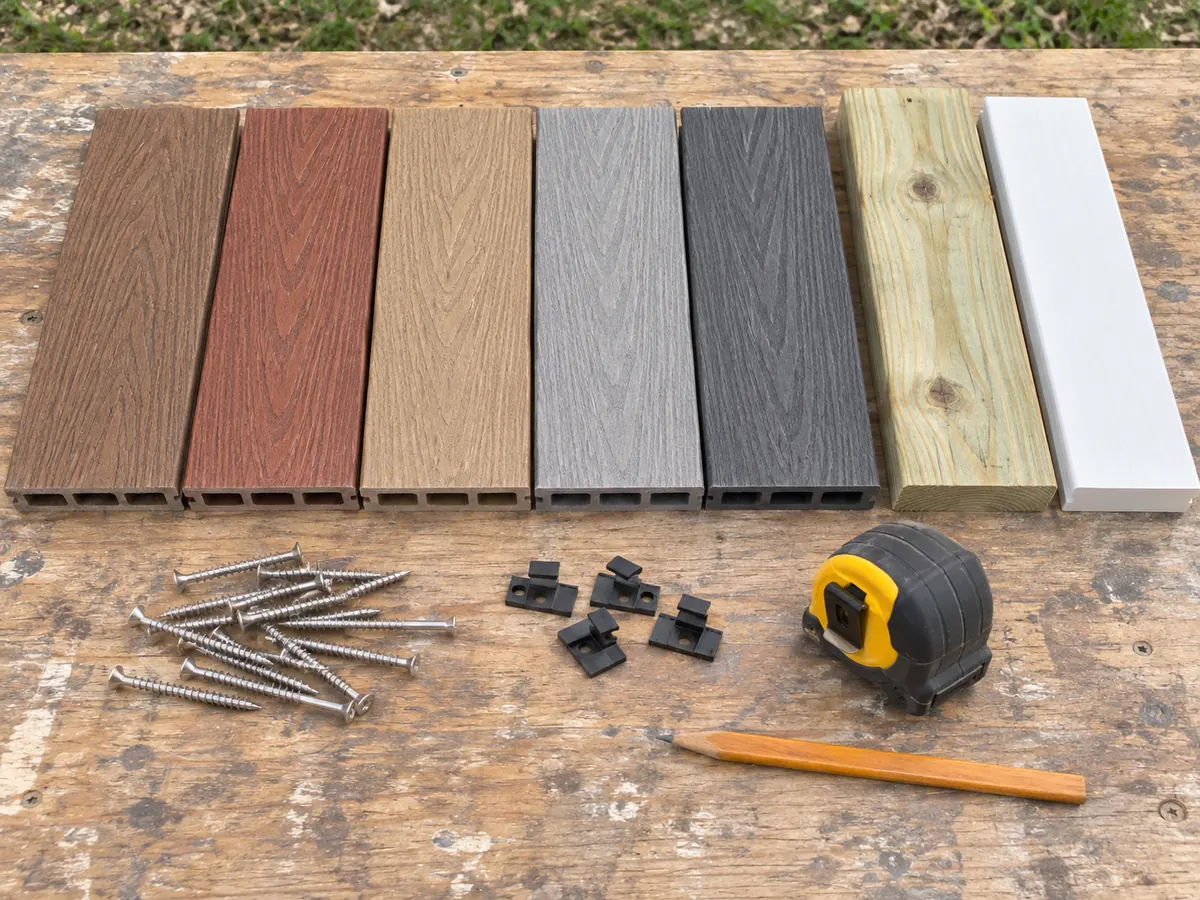
Where wood still wins
- Budget. For the largest deck at the lowest initial cost, treated pine is hard to beat.
- Structure. The frame is wood either way, and on docks the pilings and stringers always are.
- Flexibility. Wood can be re-stained a new color, sanded, and cut or patched with boards from any lumber yard.
Where composite wins
- Time. No annual sealing weekends.
- Bare feet. No splinters around pools and on docks.
- Water. Trex says its boards are approved for all water-contact applications and that pool chemicals cause no fading or structural damage (Trex FAQ).
- Long-run cost. Stain, sealer and the labor to apply them add up over the life of a wood deck. Whether composite comes out ahead depends on how long you keep the house.
A middle path
Plenty of projects mix the two: treated framing and pilings throughout, composite on the surfaces people touch, and wood where it will be painted or hidden. Our materials page covers PVC, railings and fasteners as well.